


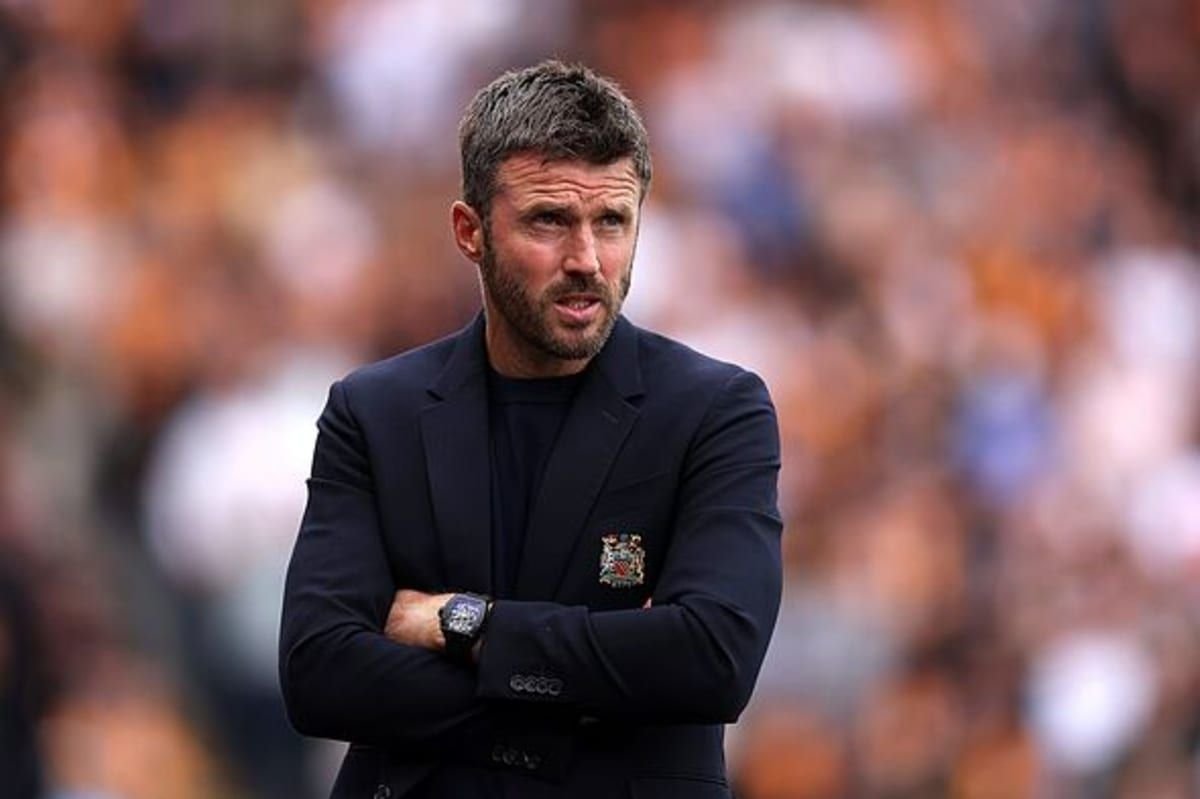
In an era of Premier League midfielders defined by flashy dribbles and high-octane box-to-box runs, Michael Carrick stood out through sheer composure, tactical intelligence, and distribution. A deep-lying playmaker who anchored some of the most successful teams in English football history, Carrick’s transition from the pitch to the dugout represents one of the most instructive coaching trajectories in modern football.
Playing Career: The Foundation of Greatness
Carrick’s journey began at West Ham United, where he graduated from the youth academy to become a key first-team player, earning a move to Tottenham Hotspur in 2004. It was at Tottenham that Carrick fully established himself as one of the top midfielders in the country, showcasing a blend of physical presence and technical ability that attracted the attention of Manchester United.
His transfer to Manchester United in 2006 marked the peak of his playing career. Carrick became the unsung anchor of Sir Alex Ferguson’s later dynasty, winning five Premier League titles, the UEFA Champions League in 2008, and the FA Cup. At international level, he earned 34 caps for the England national team, representing his country at the 2006 and 2010 FIFA World Cups.
Tactical Profile: The Deep-Lying Playmaker
Unlike traditional defensive midfielders who relied purely on tackling and physical screening, Carrick’s primary strength was his ability to receive the ball under pressure and initiate attacks from deep. His passing accuracy, vision, and ability to dictate the tempo of a match made him indispensable.
In a tactical sense, Carrick excelled in:
- Positional Discipline: Maintaining his shape and blocking passing lanes to protect the central defense.
- Build-up Play: Acting as the pivot point, drawing opponents out of position and finding the free man.
- Composure: Rarely panicking on the ball, allowing his team to control possession even under intense pressure.
Transition to Coaching and Management
After retiring in 2018, Carrick immediately transitioned into coaching, joining the Manchester United backroom staff. His deep understanding of the club’s culture and tactical demands saw him take on the role of interim manager in late 2018 following the departure of Jose Mourinho, a stint that showcased his calm leadership.
Following a brief period away from management to spend time with his family and refine his coaching philosophy, Carrick took the step into senior management, accepting the manager’s role at Middlesbrough in October 2022. In the Championship, he sought to implement a structured, possession-based brand of football, emphasizing defensive solidity and patient build-up—direct reflections of his playing days.
Coaching Philosophy and Lasting Legacy
Carrick’s coaching philosophy is heavily influenced by his experience playing under Sir Alex Ferguson and Jose Mourinho. He prioritizes tactical organization, demanding high levels of concentration and positional responsibility from his players. For young coaches looking to break into the game, Carrick’s career serves as a blueprint of how elite playing experience can be translated into effective leadership.
As of the latest verified updates, his career continues to be a point of reference for tactical enthusiasts studying the transition from the classic number 6 role to modern midfield controllers.
Conclusion
Michael Carrick’s legacy is defined not just by the silverware he lifted at Old Trafford, but by his redefinition of the defensive midfield role in modern English football. His ongoing journey in management continues to draw interest from fans of tactical football across the UK.
